Keeping a bike or ATV in service often comes down to how you support it while you work. Some maintenance tasks call for getting the whole machine off the ground; others call for holding a bare engine on a workbench. If you are deciding between a 1100 lb scissor lift and a dedicated engine repair stand, the right choice depends on where your shop work happens and what you are repairing.
Quick verdict
If you maintain complete bikes, ATVs, or scooters and need to lift them for undercarriage access, the 1100 LBS Motorcycle Lift Scissor Jack Wide Deck Hoist Stand at USD 52.99 is the more direct fit. If your jobs involve pulling small engines for rebuild work and you need controlled positioning, the For Kawasaki Suzuki Dirt Bike MX engine repair stand at USD 113.00 offers more useful angles for those tasks.
Comparison at a glance
| Item | Listed Price | Price Bar | Best For | Watch Out For |
|---|---|---|---|---|
| 1100 LBS Motorcycle Lift Scissor Jack Wide Deck Hoist Stand | USD 52.99 | Lifting a complete motorcycle, ATV, UTV, dirt bike, scooter, or snowmobile | Manual crank operation | |
| For Kawasaki Suzuki Dirt Bike MX, 2 or 4-Stroke Small Engine Engine Repair Stand | USD 113.00 | Holding vertical single-cylinder 2/4-stroke small engines during maintenance | Does not fit horizontal or lay-down cylinder engines |
Where the scissor lift wins
The 1100 LBS Motorcycle Lift Scissor Jack Wide Deck Hoist Stand is about the complete machine, not the engine. It lists a 1100 lb capacity, a wide 14.6 x 9 inch deck, and a lifting range from 3.5 to 14.5 inches. It is specified for motorcycles, ATVs, UTVs, dirt bikes, scooters, and snowmobiles, so one jack can cover several machines in the shop. The manual crank handle and powder-coated finish make it a straightforward tool for raising a bike for tire, chain, or undercarriage work.
Where the engine repair stand wins
The For Kawasaki Suzuki Dirt Bike MX, 2 or 4-Stroke Small Engine Engine Repair Stand is built for holding an engine while you work on it. It is made of carbon steel and fits most vertical single-cylinder 2/4-stroke engines, plus some small twin-cylinder engines such as the Yamaha Banshee 350. The multi-angle adjustable frame offers eight optional tilt angles with a spring lock, and two threaded rod specs adapt to 50cc, 65cc, and larger engines. That makes it useful for bench maintenance and full rebuild work where you need to position the engine securely.
Product notes
1100 LBS Motorcycle Lift Scissor Jack Wide Deck Hoist Stand
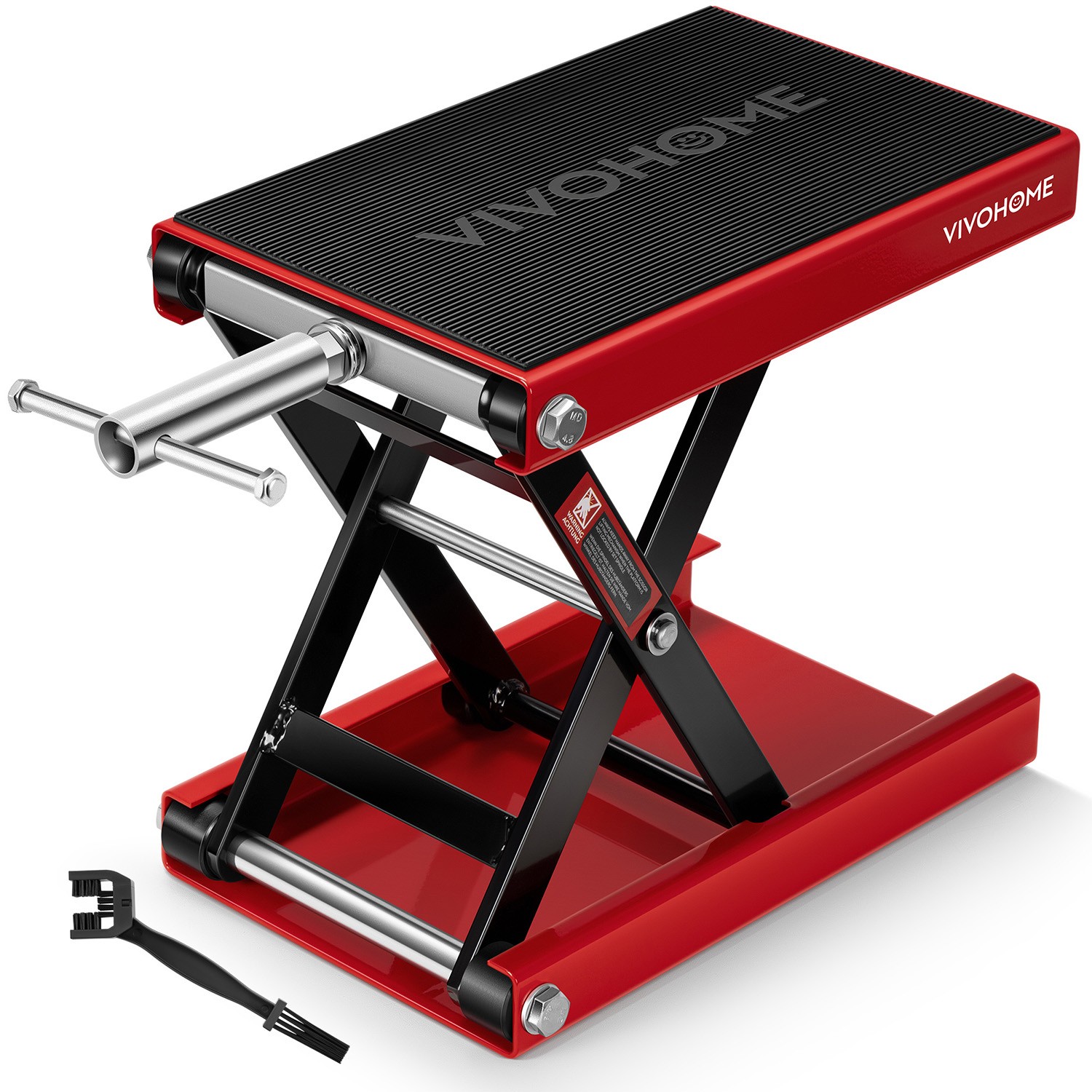
This scissor jack gives you a portable way to lift a range of machines, from motorcycles and ATVs to dirt bikes, scooters, and snowmobiles. The 1100 lb capacity and wide deck are the main draw, and the height range of 3.5 to 14.5 inches is enough for many shop tasks. Choose this when you are working on the whole machine rather than a stripped engine. Keep in mind the drive is manual, so raising and lowering is done with a crank handle rather than a power unit. The deck measures 14.6 by 9 inches, so it is a compact lifting surface for frame and undercarriage access rather than a full-service workbench.
For Kawasaki Suzuki Dirt Bike MX, 2 or 4-Stroke Small Engine Engine Repair Stand
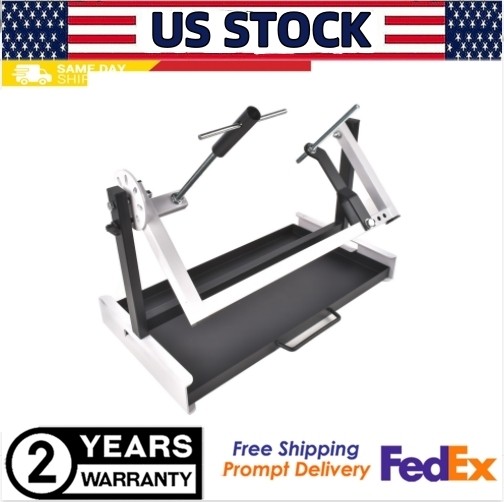
This stand is the more specialized of the two. It is made of carbon steel and designed as a direct replacement part, and the spring-locking rotary dial lets you choose among eight tilt angles. That adjustability is useful for component installation, removal, and debugging on a workbench. It fits most vertical single-cylinder 2/4-stroke engines and some small twin-cylinder engines, including the Yamaha Banshee 350; it is not intended for horizontal or lay-down cylinder engines. Choose this when your work is centered on the engine itself rather than the full bike.
Final choice by use case
Choose the 1100 lb scissor jack if you need to lift complete machines for tire, chain, or general undercarriage work across a variety of bikes and ATVs. Choose the engine repair stand if your bench projects center on vertical single-cylinder 2/4-stroke small engines and you want a multi-angle holder for rebuilds. If you routinely do both types of work, these two tools serve different points in the maintenance process and can coexist in the same shop; the one to start with depends on where your next job is.